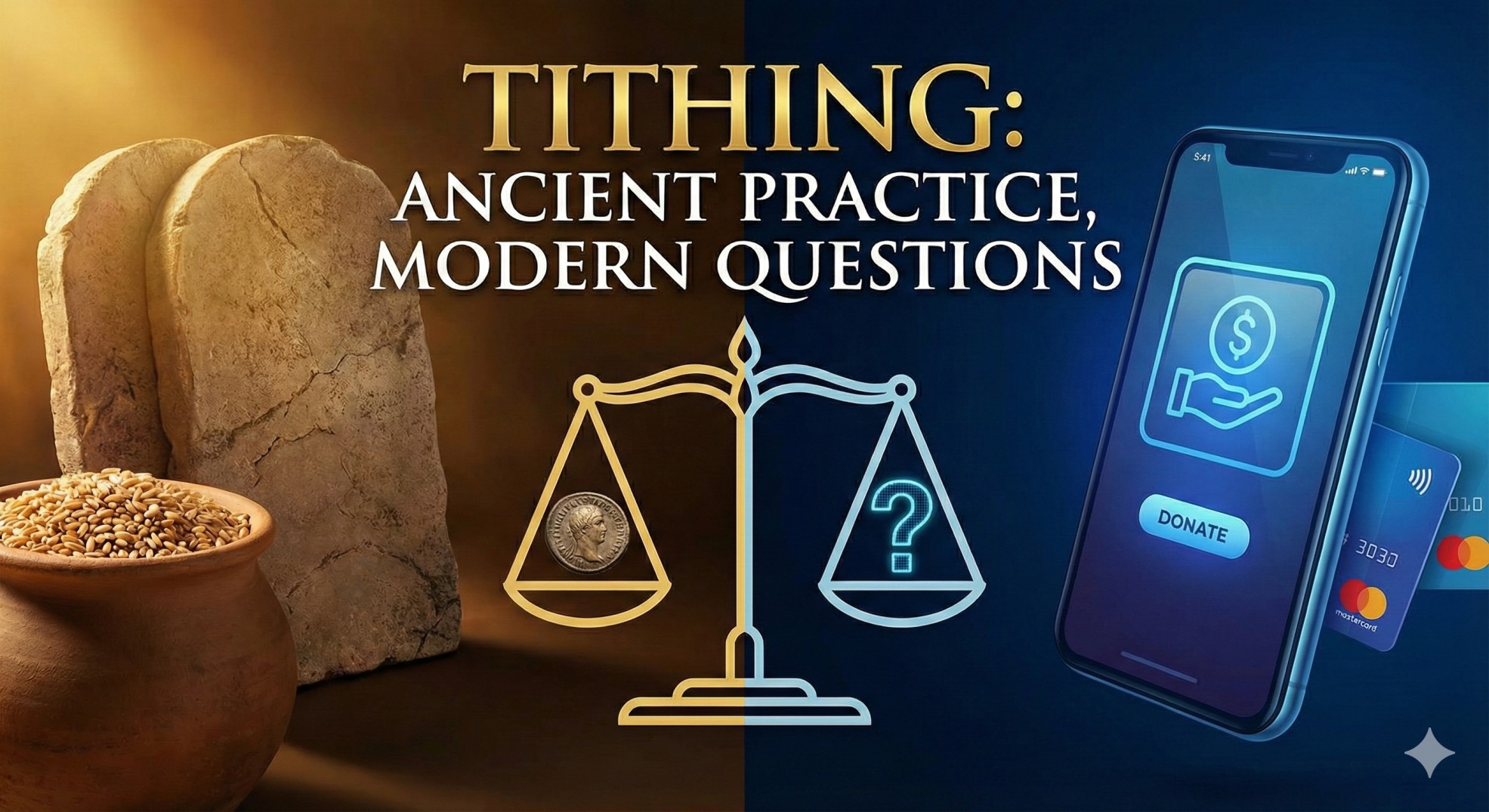
The word “tithe” comes from Old English “teogotha,” which simply means tenth. This practice appears
throughout Scripture, beginning in the earliest books of the Bible. When we talk about tithing today,
we’re discussing something that has shaped religious communities for thousands of years. The
conversation continues because money and faith intersect in ways that make people uncomfortable,
curious, and sometimes confused.
The Old Testament Foundation
The ancient Israelites lived under the Mosaic Law, a
covenant between God and His people that governed every
aspect of life. This wasn’t just a collection of religious rules.
The Law shaped economics, agriculture, family
relationships, and community welfare. Tithing fit into this
larger structure as one element among many.
When we read Leviticus and Numbers, we discover that God
commanded the Israelites to give one-tenth of their
produce and livestock. This wasn’t a suggestion or a nice
idea. The Law required it. The agricultural nature of ancient
Israel meant that most people raised crops or herded
animals. They didn’t receive paychecks every two weeks.
Their income came at harvest time or when animals were
born and matured.
The tithe went to specific groups and purposes. God
designed this system to sustain the religious infrastructure
of the nation. The Levites, who served in the tabernacle and
later the temple, received no land inheritance. Other tribes
got territory to farm and develop. The Levites got the tithe.
Their service to God was their work, and the community
supported that work through giving.
This practice connected to a bigger theological truth:
everything belongs to God. The land, the rain, the sunshine,
the health to work4all came from Him. Giving back one
tenth acknowledged this reality. It was a regular reminder
that the people were stewards, not owners. Their prosperity
depended on God’s blessing, not their own cleverness or
strength.
Click here to get FREE Complete eBook Discussion on Tithing(OT/NT).




About the Author